If you picture Las Olas Isles as one simple “deepwater” neighborhood, you could miss details that matter once your boat is part of the equation. Buyers often fall in love with the view first, then realize canal width, bridge timing, dock layout, and seawall condition can all shape how the property actually lives. This guide will help you understand the basics of dockage and canals in Las Olas Isles so you can ask better questions, compare homes more confidently, and move forward with clarity. Let’s dive in.
Why Las Olas Isles Varies
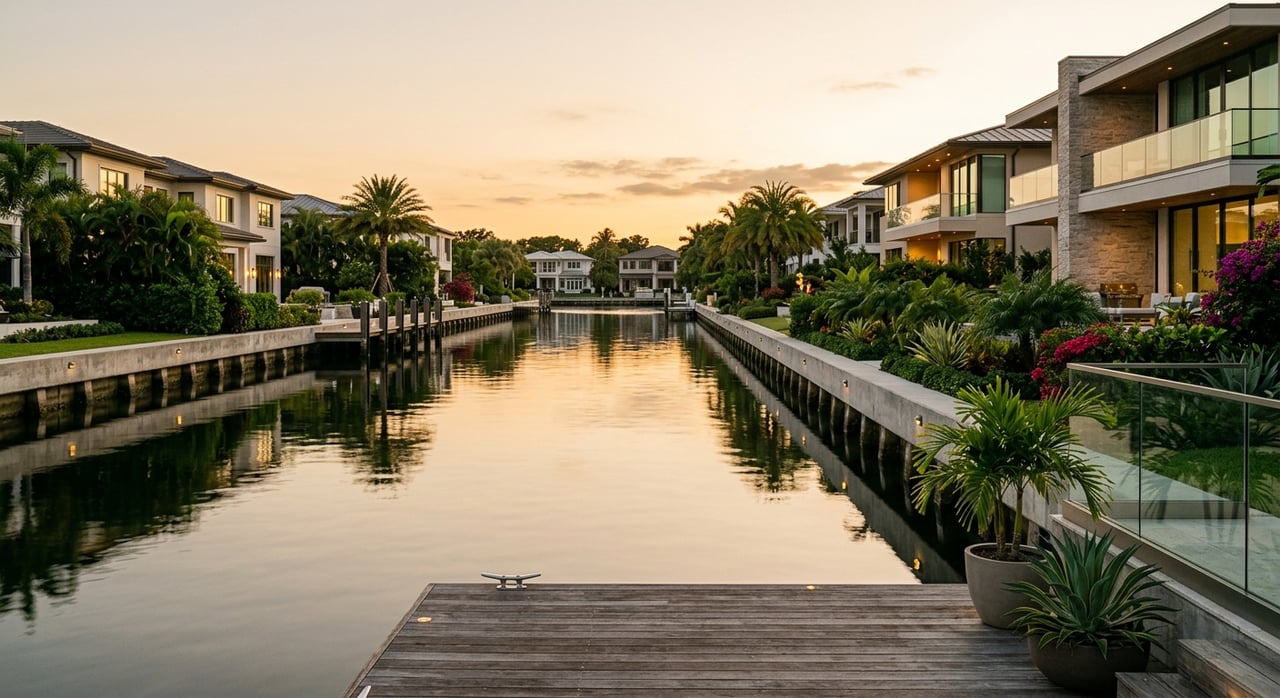
Las Olas Isles is a cluster of man-made islands in east-central Fort Lauderdale, positioned between the New River and Middle River on the Intracoastal Waterway. Broward County describes it as a finger-canal system, with current speed and direction influenced by the tides.
That means this is not one uniform boating environment. Two homes in the same broader neighborhood can offer very different day-to-day dockage experiences depending on canal shape, width, depth, and route to open water.
Canal Width Matters More Than You Think
One of the biggest misconceptions in waterfront shopping is that boat fit is mostly about lot size or seawall length. In Las Olas Isles, canal width can be just as important because it affects turning room, docking ease, and how far a boat can project into the waterway.
Published market guidance describes many canals here as roughly 85 to 110 feet wide, with some wider stretches around 150 to 300 feet on certain fingers. That range is helpful for context, but it should be treated as directional, not final, because actual fit depends on the specific property and a current survey.
Fort Lauderdale code adds another key limit. Vessels moored to a dock or seawall should not extend beyond 30 percent of the canal or waterway width, measured from the recorded property line.
In practical terms, a home can look boat-ready online and still require a closer review. The real question is not just, “Is there dockage?” It is, “How much usable water remains once you account for the canal width, property line, dock projection, and the way your vessel will sit?”
Depth Is Local, Not Universal
Las Olas Isles is often described as deepwater, and in many cases that is fair. Still, depth is not uniform across the neighborhood.
Published market guidance points to shallower pockets around 5 feet plus and deeper pockets around 8 to 10 feet plus, including on streets such as Nurmi Drive, Royal Palm Drive, Fiesta Way, and parts of Seven Isles. The key takeaway is simple: a “deepwater” label does not replace a property-specific depth check.
For buyers, that means you should verify depth at the dock and at the canal mouth, especially at low tide. Since the area is tidally influenced, the number that matters is not just a broad neighborhood claim but the actual usable depth along your route.
Dock Layout Can Change Everything
Private dock setups in Fort Lauderdale often include a seawall-backed dock with a lift, slip, or another mooring device. The best configuration depends on more than preference. It also depends on lot geometry, canal width, and how the vessel needs to be secured.
A city memo tied to a property on Hendricks Isle shows how specific these decisions can get. In that case, the applicant said perpendicular dockage was needed to secure a 28-foot vessel, and the design raised questions because the lift extended farther than the permitted distance.
This is a good reminder that not every lot supports every dock style. In some areas, especially where geometry is tighter, the way a boat sits at the dock may be driven by the property itself rather than by what you would ideally choose.
Permits Are Part of Waterfront Due Diligence
In Fort Lauderdale, docks, slips, seawalls, boat davits, hoists, boat lifts, and mooring piles are regulated mooring structures. The city requires permits and owner consent before construction on navigable waters.
That is why dockage should be treated as part of your due diligence, not just a lifestyle bonus. If a dock, lift, or seawall was added, expanded, or altered, you want to know whether the work was properly permitted and whether future changes are realistic.
The city also says dock decking replacement requires a permit and Broward County approval. For exterior work, including docks and seawalls, Fort Lauderdale requires a current signed and sealed survey plus a site plan locating the proposed work.
Florida DEP guidance adds more context for single-family properties. A qualifying single-family dock general permit is capped at 2,000 square feet of over-water area, intended for two vessels, and limited to one dock per parcel.
Seawalls and Dockage Go Together
When buyers think about boating, they often focus on the boat lift or slip first. But dock usability and seawall condition are closely connected.
Broward County treats Las Olas Isles as a tidally influenced coastal area, and the regional standard uses a 5-foot NAVD88 minimum for new or substantially repaired tidal flood barriers. That matters because a seawall project can affect cost, project timing, and even how dock access functions during repairs.
If you are comparing two waterfront homes, similar dockage does not always mean similar ownership costs. A well-positioned dock paired with an aging seawall can create a very different budget picture than a home where both systems are already in strong shape.
Bridge Clearances Shape Boat Choice
For many waterfront buyers, the dock is only half the story. The route out matters just as much.
NOAA’s Coast Pilot lists several bridge clearances that are highly relevant for Las Olas Isles boating. Las Olas Boulevard is reported at 24 feet of center clearance, Oakland Park Boulevard at 22 feet, Sunrise Boulevard at 25 feet, and SE 17th Street at 55 feet of authorized center clearance.
If your boat has a fixed top, tower, or taller air draft, these numbers can become the deciding factor. A property may have enough depth and a workable dock, but the practical limit could still be the bridge route between your canal and your preferred water access.
Bridge Openings Affect Daily Life
Bridge timing is not just a navigation detail. It is part of the rhythm of owning a waterfront home in this area.
According to NOAA, Las Olas Boulevard opens on the quarter-hour and three-quarter hour. Sunrise Boulevard and SE 17th Street open on the hour and half-hour, while Oakland Park Boulevard opens on the quarter-hour and three-quarter hour. NOAA also notes weekday commuter exceptions for SE 17th Street.
That may sound minor on paper, but it can shape your boating routine. If you plan frequent sunset cruises, weekend runs, or early-morning departures, route timing can influence how convenient a specific address feels.
A Practical Buyer Checklist
If you are evaluating a Las Olas Isles waterfront home, these are the questions worth answering before closing:
- What is the actual canal width at the property line?
- How much usable water remains after setbacks and dock projection?
- What is the verified depth at the dock and at the canal mouth at low tide?
- What is your boat’s air draft compared with the bridges on your route?
- Is the existing dock permitted?
- Would a lift, expansion, or reconfiguration fit city and DEP limits?
- Does the seawall condition affect your near-term budget or project timeline?
These are not niche questions for large-yacht owners only. They are practical questions for anyone who wants the waterfront experience to work smoothly after move-in.
What Sellers Should Prepare
If you are selling a waterfront home in Las Olas Isles, dockage details can help serious buyers get comfortable faster. Buyers often move more confidently when the facts are organized early.
Helpful materials may include a current survey, records for permitted dock or seawall work, and any available information on canal depth, lift setup, or vessel fit. Clear documentation does not just answer questions. It can also reduce uncertainty during negotiations.
Why Micro-Location Matters Here
Las Olas Isles rewards a street-by-street approach. A home’s boating value is shaped by a mix of canal width, depth, tidal influence, dock design, bridge route, and seawall condition.
That is why broad labels only go so far. In this neighborhood, the finer details are often what separate a good waterfront match from a frustrating one.
When you understand those details up front, you can shop smarter, price more accurately, and choose a home that fits both your lifestyle and your vessel.
If you are buying, selling, or comparing waterfront homes in Las Olas Isles, Latitude Key can help you evaluate the boating details that matter before they become surprises.
FAQs
What makes canal conditions different within Las Olas Isles?
- Las Olas Isles is a finger-canal system with tidal influence, so canal width, depth, and water movement can vary from one street or finger to another.
How wide are canals in Las Olas Isles?
- Published market guidance describes many canals as roughly 85 to 110 feet wide, with some wider stretches around 150 to 300 feet, but exact width should be confirmed at the specific property.
How deep are canals in Las Olas Isles?
- Depths are not uniform. Published guidance points to some shallower areas around 5 feet plus and deeper pockets around 8 to 10 feet plus, so property-specific verification is important.
Why does Fort Lauderdale dock permitting matter for buyers?
- Docks, lifts, seawalls, and related mooring structures are regulated by the city, which means permitting status can affect legality, future upgrades, and your overall due diligence.
How do bridge clearances affect Las Olas Isles boat owners?
- Bridge clearances can limit which boats can comfortably use a route, especially vessels with fixed tops, towers, or higher air draft, even if the dock itself works well.
What should a seller gather for a Las Olas Isles waterfront listing?
- A seller should be ready with a current survey and any available records for permitted dock, lift, or seawall work, along with practical details that help a buyer evaluate vessel fit and access.