Buying Fort Lauderdale waterfront can feel like buying a dream and a due-diligence project at the same time. You may be picturing sunrise coffee by the dock or easy afternoons on the water, but the right purchase depends on details that are easy to miss on a first tour. If you understand how water type, boating access, flood exposure, permits, and carrying costs work here, you can shop with much more confidence. Let’s dive in.
Waterfront means different things here
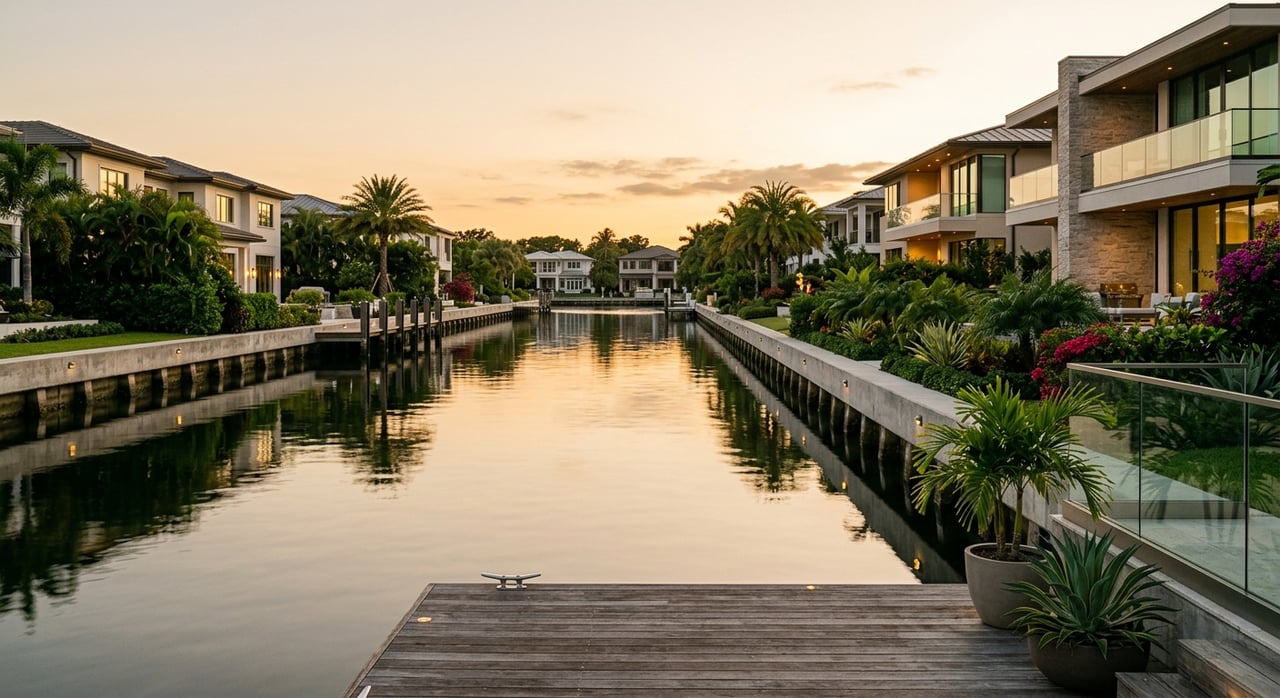
Fort Lauderdale is shaped by water in many forms, not just oceanfront property. The city reports 165 miles of navigable waterways, including the Atlantic Ocean, the Intracoastal Waterway, the New River, Middle River, and a wide network of canals and drainage channels.
That matters because two homes that are both called “waterfront” can offer very different day-to-day experiences. One may feel quiet and tucked away, while another may have more boat traffic, more exposure, or a faster route to open water.
When you tour a property, start by asking what body of water it actually fronts. That one detail can affect privacy, views, boating convenience, and how the home lives over time.
Flood review comes first
Fort Lauderdale is low-lying and surrounded by water, so flood due diligence is essential. The city notes that local flooding can result from heavy rain, hurricanes, storm surge, high tide, and tidal waters.
A canal-front lot that feels sheltered is not automatically low risk. The city also points buyers to the reality that flood exposure should be reviewed carefully on every property.
Broward County’s flood-zone viewer uses maps effective July 31, 2024. The county also publishes a future-condition 100-year flood map for 2060, along with GIS layers for flood zones and evacuation zones.
That gives you a more complete picture than a simple yes-or-no flood answer. If you are comparing multiple homes, it helps to review both current mapping and longer-range conditions before you commit.
Boat access is more than a dock
A dock is only the starting point. The real question is how usable the route is from that dock to open water.
Fort Lauderdale is a major boating base, and local waterways connect many homes to the Intracoastal and beyond. But the route can change everything for a buyer who plans to keep a boat at home.
Check the lowest bridge on the route
Bridge clearance is one of the most important filters in a waterfront search. NOAA lists Fort Lauderdale’s SE 17th Street Bridge with an authorized clearance of 55 feet, but other upstream crossings can be much lower.
NOAA also lists clearances of 21 feet at South Andrews Avenue, 20 feet at the William H. Marshall Memorial Bridge, and 4 feet at the Florida East Coast Railway bridge. For many buyers, the lowest bridge on the route matters more than the bridge closest to the property.
If your boat has a mast, tower, flybridge, or taller profile, this is not a minor detail. A beautiful dock does not help much if your boat cannot clear the route.
Factor in no-wake zones and current
Travel time on the water is not just about distance. NOAA notes no-wake limits on the New River and Stranahan River, along with regulated manatee-protection zones in Port Everglades and the Dania Cut-Off Canal.
NOAA also warns that strong currents may be encountered above the Southeast Sixth Avenue Tunnel. So even if a property looks close to the inlet on a map, the practical boating experience may be slower or more technical than expected.
For that reason, waterfront value is often tied to route quality, not just frontage. Proximity to the inlet can improve convenience, but bridge limits, speed-controlled stretches, and current all shape how useful a dock really is.
Insurance and carrying costs deserve early attention
Waterfront ownership comes with costs that can look different from inland homes. It is smart to estimate these numbers before you fall in love with a property.
Flood insurance is separate
Most standard homeowners insurance policies do not cover flood damage. The City of Fort Lauderdale says flood insurance may be required for financed purchases in Special Flood Hazard Areas.
Timing matters too. The city notes that National Flood Insurance Program coverage has a 30-day waiting period before it takes effect.
Fort Lauderdale also reports that its participation in the NFIP Community Rating System currently translates to a 20% savings on flood insurance premiums for residents. That can be helpful, but your actual premium will still depend on the specific property and quote.
Property taxes may rise after closing
Do not assume the seller’s current tax bill will be your future tax bill. The Broward County Property Appraiser says that a change in ownership resets assessed value to full market value, which can increase property taxes.
That is especially important for waterfront buyers, where purchase prices can differ significantly from long-held assessed values. A realistic post-closing estimate can help you avoid budget surprises.
Florida’s new flood disclosure matters
As of October 1, 2024, Florida law requires a seller of residential real property to provide a flood disclosure at or before contract execution. The statutory form asks whether the seller has filed flood claims or received federal flood assistance.
The form also states that homeowners insurance does not include flood coverage and encourages buyers to discuss separate flood insurance with their insurance agent. For buyers, this adds another useful layer of due diligence before moving forward.
Seawalls, docks, and permits can affect value
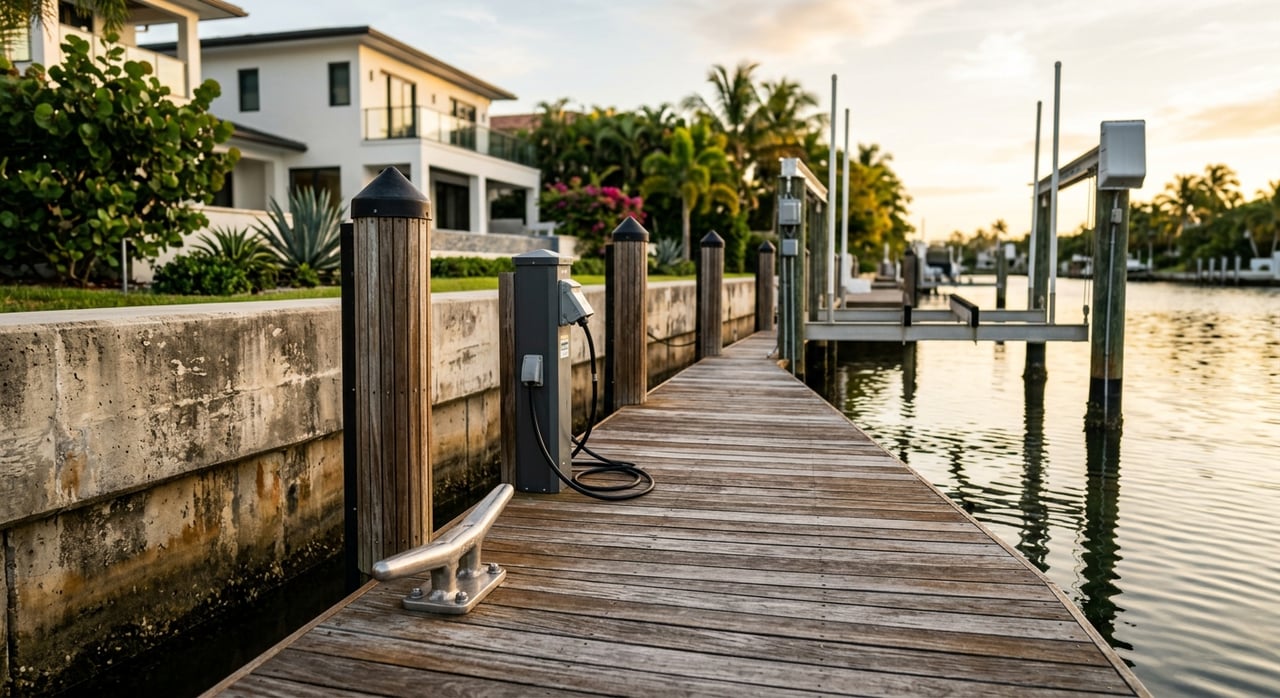
On Fort Lauderdale waterfront, the edge of the property matters almost as much as the house. Seawalls, docks, lifts, piles, and decking all fall into a regulated environment.
Know the seawall standard
Fort Lauderdale’s revised tidal barrier ordinance sets a 5-foot NAVD minimum top elevation for seawalls and tidal barriers. The city says this rule applies when a new seawall is built, when a seawall is in significant disrepair, or when tidal flow breaches have affected neighboring property or right of way.
If a seawall needs work, that may become a major ownership cost. This is one reason waterfront inspections should go beyond the house itself.
Permits matter for past and future work
The city says dock-deck replacement requires a permit and Broward County approval. It also says nothing but a mooring device may be attached to a seawall.
If the frontage is on a private waterway, written permission from the waterway owner must accompany a dock application. Buyers planning renovations should also know that permit applications submitted after December 31, 2023 are subject to the 2023 Florida Building Code.
Fort Lauderdale’s permit categories specifically include Boatlift-Dock-Seawall-Pile. The city also regulates development within natural floodplains, including construction, filling, or altering natural elevation.
In simple terms, if you plan to upgrade the dock, replace decking, improve the seawall, or change the site, permit research should start early. It is also worth confirming whether the property is inside Fort Lauderdale city limits or in unincorporated Broward, because the city says it can only process permit applications for addresses within city boundaries.
Ask for the elevation certificate
Fort Lauderdale says residents can request a copy of a property’s elevation certificate from the Department of Sustainable Development. This document can help support floodplain compliance review and flood-insurance transactions.
If one is available, ask for it early. It can be a useful piece of the overall risk and insurance picture.
Plan for hurricane evacuation reality
Waterfront living also means thinking through storm planning before you buy. Broward County says Plan A applies to Category 1 or 2 hurricanes and includes residents beside tidal bodies of water, in low-lying areas, and east of the Intracoastal Waterway.
For Category 3 or higher storms, Plan B extends to residents east of U.S. 1. If a property is part of your primary residence plan, second-home strategy, or seasonal use, evacuation logistics should be part of the conversation from day one.
Questions to bring to a showing
If you are serious about Fort Lauderdale waterfront, these are smart questions to ask early:
- What water body does the property front?
- What is the current flood-zone result using Broward County’s July 31, 2024 map?
- Is an elevation certificate available?
- What is the route from the dock to open water?
- What is the lowest bridge clearance on that route?
- Are there no-wake or manatee-protection zones between the home and the inlet?
- Were dock, lift, decking, pile, and seawall improvements properly permitted?
- Is the property in a Broward evacuation zone, and would it fall under Plan A or Plan B?
- What are the projected flood-insurance, wind-insurance, and post-closing tax costs?
- Has the seller had flood claims or received flood assistance, as addressed in Florida’s disclosure form?
Build the right team early
A waterfront purchase often benefits from more specialized review than a standard home search. Depending on the property, it may be reasonable to involve a licensed flood-insurance agent, a marine surveyor or boat captain to evaluate the route to the inlet, and a seawall and dock contractor familiar with Fort Lauderdale permits.
That kind of preparation can give you clearer numbers, fewer surprises, and stronger confidence before you close. In a market where lifestyle and technical detail go hand in hand, that is often the difference between a good waterfront buy and a great one.
If you want a more tailored look at Fort Lauderdale waterfront options, route constraints, or neighborhood-by-neighborhood tradeoffs, Latitude Key can help you build a focused plan around how you actually want to live on the water.
FAQs
What should you check first before buying Fort Lauderdale waterfront?
- Start with the water body, current flood-zone information, and the route from the dock to open water, including the lowest bridge clearance.
How do bridge clearances affect a Fort Lauderdale waterfront home purchase?
- Bridge clearances can limit whether your boat can actually reach open water, so the lowest bridge on the route may matter more than the presence of a dock.
What flood documents should you request for a Fort Lauderdale waterfront property?
- Ask for the current Broward County flood-zone result, the seller’s flood disclosure, and the elevation certificate if one is available.
What seawall rules matter for Fort Lauderdale waterfront buyers?
- Fort Lauderdale’s tidal barrier ordinance sets a 5-foot NAVD minimum top elevation for seawalls and tidal barriers in certain situations, so seawall condition and compliance should be reviewed carefully.
Why can property taxes change after buying a Broward waterfront home?
- Broward County says a change in ownership resets assessed value to full market value, which can raise your property tax bill after closing.