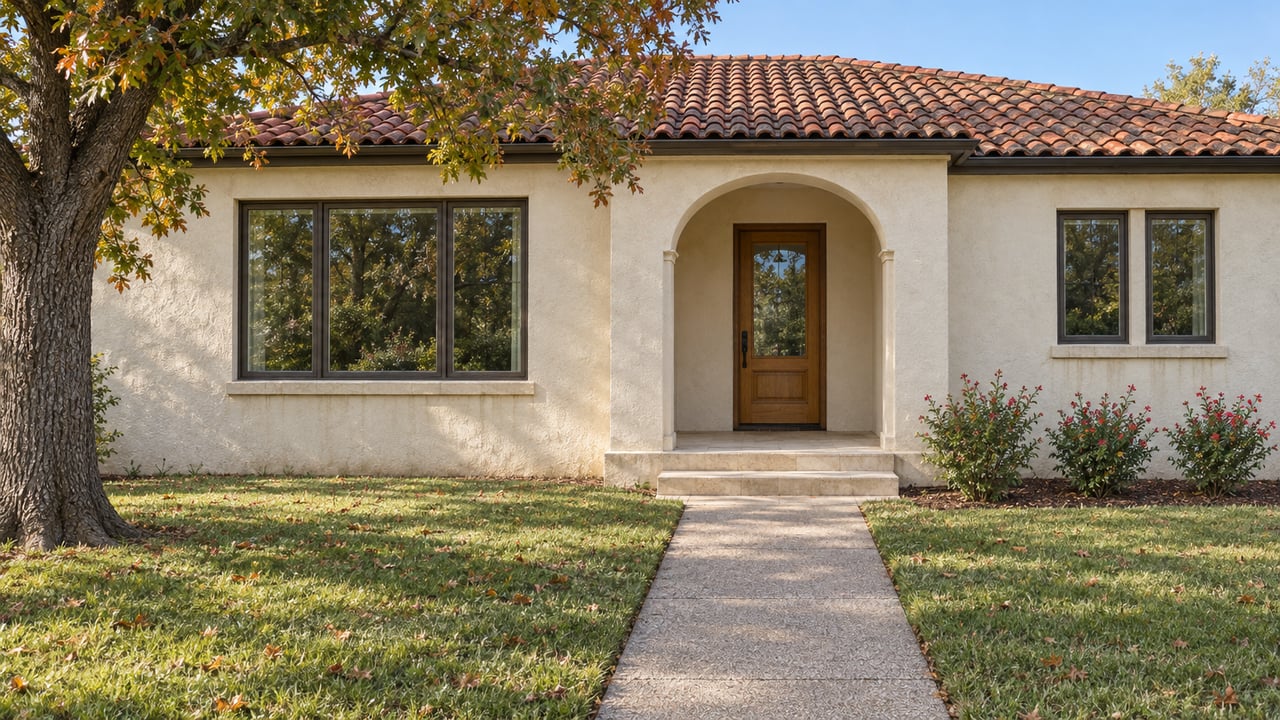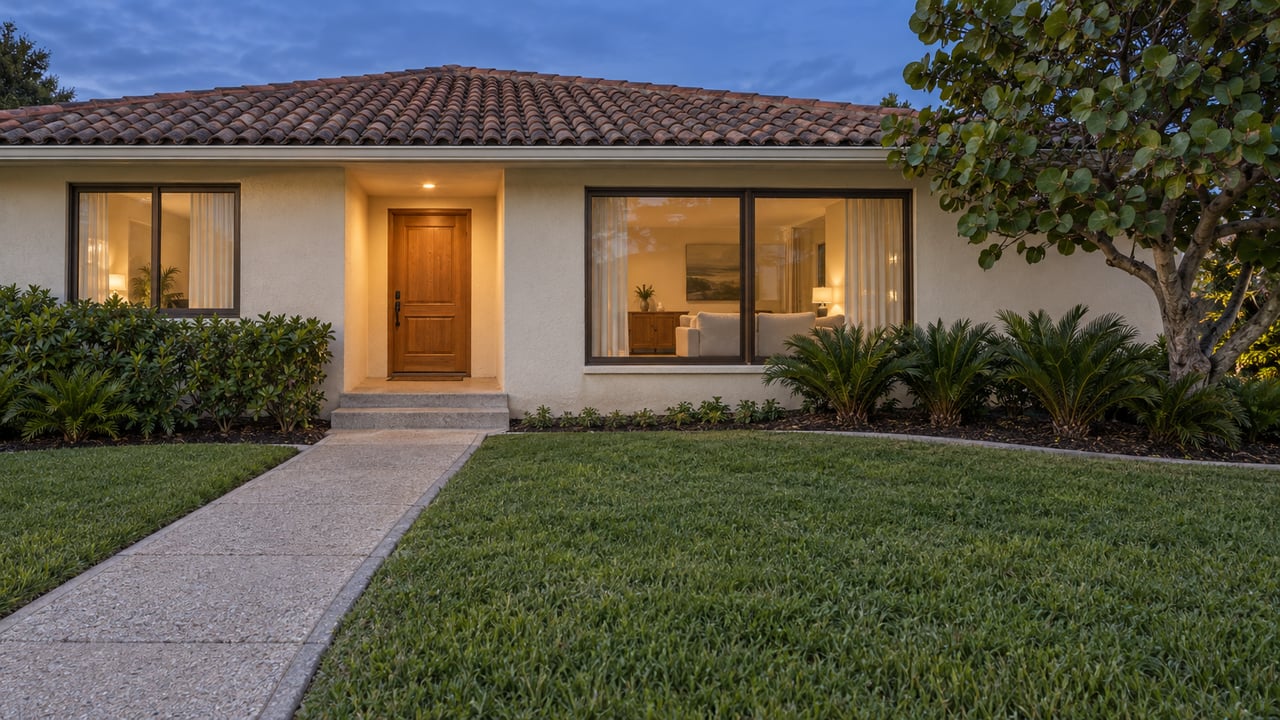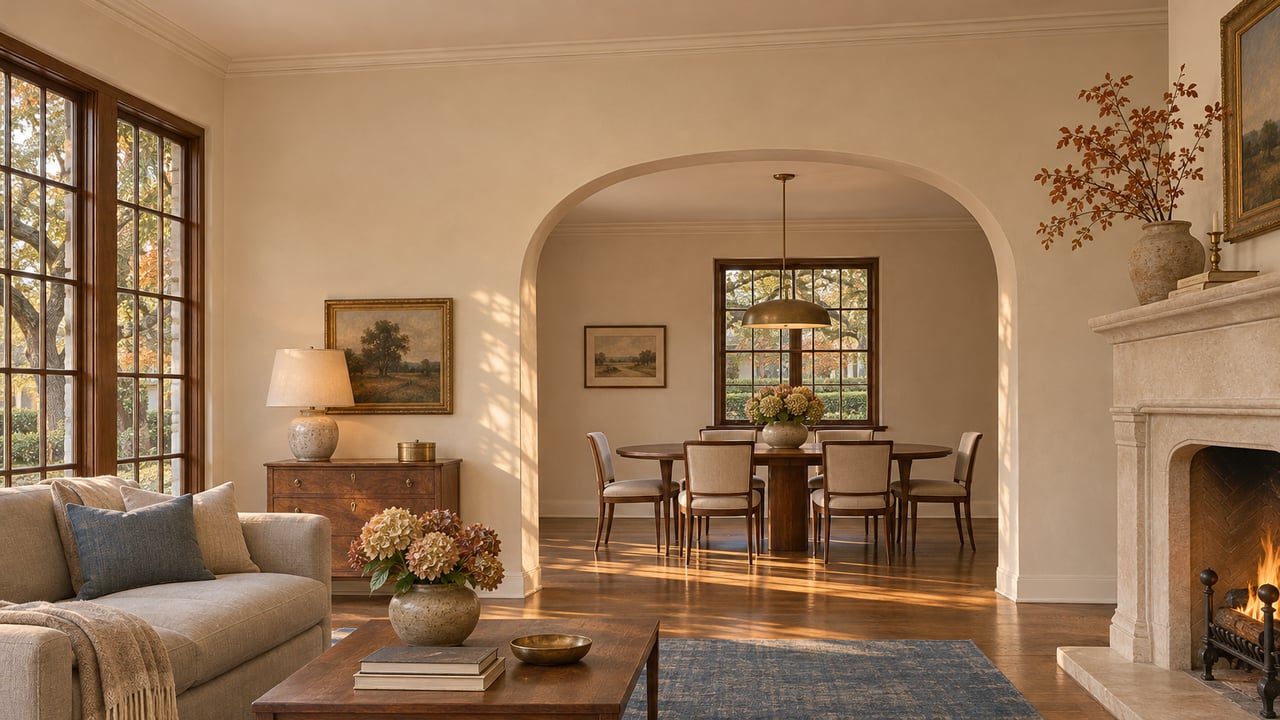
Eva Cherry's bungalow in University Park was built in 1938. It has two bedrooms, two baths and 1,405 square feet. When she renovated it with architect Eddie Maestri of Maestri Studio and contractor RJA Construction, she thought about adding on and then decided not to. "I'm glad that we didn't expand, because sticking within the footprint and keeping the budget focused on what was already here let me do more of what I really wanted to do," she told D Home in its fall 2026 issue.
The city's own permit counts show the same choice at the scale of the whole market. Fewer houses in University Park are being replaced, and more are being kept and reworked. That changes what a buyer touring a 1930s cottage or a 1980s traditional should pay attention to. The existing floor plan is a large share of what you are buying, and the old assumption that every older house on a good lot is really a lot with a house on it fits this market less well each year.
Three permit years, two different lines
The City of University Park reports residential construction in its annual reports. Over three reported years, new-dwelling permits fell while remodel permits held steady.
In 2022, the city issued 89 new one- and two-family dwelling permits, 65 of them for single-family detached houses, along with 116 major residential remodel and addition permits, according to the 2022 annual report. In 2023, new dwelling permits fell 31% to 61, including 41 single-family detached houses, while the city issued 107 major remodel and addition permits, per the 2023 annual report. For 2025, the city's 2025–2026 annual report lists 52 new dwelling permits and 121 remodel and addition permits.
In 2022 the city issued about 1.3 remodel permits for every new dwelling permit. In 2023 it was about 1.75, and in 2025 about 2.3. Remodel counts stayed in a narrow band of 107 to 121 a year, while new-dwelling counts fell from 89 to 52.
The city's budget office describes the same pattern. The FY2026 budget memo, dated August 15, 2025, says permits for new single-family homes "continue to trend downward, with year-over-year declines," and that residential remodels, additions and commercial construction have kept building-permit revenue strong.
Permit counts record what owners filed for. They do not record why. They do show that in a city of more than 7,000 homes, far more owners are reworking an existing house in a given year than replacing one.
What a new house here is
New construction matters to this story because it sets the other end of the comparison. In 2023, according to the city's annual report, new single-family dwellings in University Park averaged 7,620 square feet. New duplex dwellings averaged 4,170 square feet and single-family attached dwellings 4,050.
Recent new builds that have reached the market match that scale. In October, CandysDirt profiled 3932 Bryn Mawr, a five-bedroom, eight-bath Southern Colonial of 7,840 square feet by Les Owens of LRO Residential, priced at $8.75 million while it was still under construction. Owens told the site the antique brick and cedar shingle roof were chosen so the first impression would be "unforgettable," and called the cedar shingles "really rare and costly." In May, CandysDirt covered 3517 Villanova Street, a five-bedroom Hill Country modern of 6,983 square feet by Brian Shaw of Shaw Building Group with architect Clay Nelson, priced at $7.2 million. "I build homes I want to move into," Shaw told the site.
A buyer choosing in University Park is choosing between that kind of house, roughly 7,000 to 8,000 square feet with a builder's finish and an asking price in the high seven figures, and an older house a fraction of that size. Cherry's bungalow is less than a fifth the size of the 2023 average for a new single-family house. With fewer owners clearing lots, more of those older, smaller houses stay houses, and each one is judged on how well its existing plan works.
What the two D Home renovations kept
Two University Park renovations featured in D Home this year show what "keeping" means in practice. In both, the owners left the footprint alone.
Designer Kara Adam and her husband, Austin, bought a stone-clad 1980s traditional designed by the late architect Cole Smith. D Home reported in its spring 2026 issue that the 6,700-square-foot house had been barely touched since it was built. "The inspections came through and they were great. And this house had the bones we wanted," she told the magazine. John Jarrett of Jarrett Construction led the first phase. The team added no square footage and reconfigured only the kitchen, joining it to the breakfast room. Smith's vaulted, hand-carved beamed ceiling, the stone wall behind the great-room fireplace and the original hardwood floors all stayed. Over six years the family came back for more phases, relandscaping the yard, redesigning the third-floor playroom and renovating the bathrooms. D Home also reported that the half-acre lot came with a pool, a yard and a backhouse, which the magazine called a rare trifecta for the Park Cities.
At Cherry's bungalow, the work restored period character. A previous renovation had stripped much of the kitchen's original charm, so the Maestri Studio team, with lead designer Chris Huffman, brought it back with vintage drawer pulls, a retro range and reproduction tile. The arched living-room opening stayed, and the original doorbell chimes found inside a wall were sent out for repair and rehung. Because the house does not cover the whole lot, Cherry has what she called "a nice, giant backyard."
The two houses are nothing alike, a modest 1938 single-story and a large 1980s stone traditional. In both, the budget went into the rooms that were already there. For the Adams, the architecture was the reason they bought.
How to tour an older house with this in mind
If you are comparing University Park with Preston Hollow, Lakewood or the rest of the Park Cities, those permit numbers suggest a few things to look for when an older house is on your list.
Read the plan before the lot. The usual teardown reading starts with the lot and treats the house as a cost to remove. The Adam renovation started from the other side, with inspections, the original architect's work and a layout the family could live in after changing a single room. The questions to ask on a tour are whether the kitchen can join the room next to it, whether the original ceilings, floors and millwork are intact, and whether the stairs, landings and upper floors are usable space. Those answers separate an older house worth keeping from one whose value sits mostly in the ground.
Count what the lot already holds. A pool, a yard and a backhouse on one property were notable enough in the Park Cities for D Home to mention, and a small house on a full lot leaves open space that a 7,000-square-foot replacement would mostly fill. When you compare an older house with a new build, put the outdoor space in the comparison alongside the interior square footage.
Expect to do the work in phases. Six years of phased updates at the Adam house and a single focused restoration at the Cherry bungalow are both normal ways to own a house here. A plan to buy, live in the house, and renovate in stages is a sensible way to budget for an older University Park home. For many buyers, it is easier to live with than a full rebuild.
Keep the remodel count in mind. The city issued 121 major remodel and addition permits in 2025, more than twice its count of new dwelling permits. Firms like Maestri Studio, RJA Construction and Jarrett Construction have all been named in recent local coverage of exactly this work.
For more on daily life around the shopping streets near these houses, see our look at how Snider Plaza handled its parking debate and our University Park neighborhood guide. Buyers splitting time between Dallas and the coast may also want our piece on designing a Dallas–Fort Lauderdale life.
FAQ
How many new homes did University Park permit in 2025? The city's 2025–2026 annual report lists 52 new dwelling permits for 2025, alongside 121 remodel and addition permits.
How large are new houses in University Park? In 2023, new single-family dwellings permitted by the city averaged 7,620 square feet, according to its annual report. New builds profiled in 2026, at 3932 Bryn Mawr and 3517 Villanova, are 7,840 and 6,983 square feet.
Do University Park renovations usually add square footage? The two renovations D Home featured in 2026 did not. The Adam house kept its 6,700 square feet, and the Cherry bungalow stayed at 1,405.
If an older University Park house is on your shortlist, Latitude Key can walk it with you and give you a straight assessment of whether its plan, lot and original architecture make it a house to keep, then help you compare it with new construction nearby. Reach out to schedule a private showing and build a plan around the house you want to live in.